
Agent and agentic AI assuranceAgentic AI that does only what it was allowed to.
Tech4Biz tests the memory your agents rely on, and builds the gate that checks an agent’s action before it runs.
An agent that reads the wrong thing once can carry it for the rest of its life. Most teams shipping agents in 2026 have no way to test what went into memory, what came back out, and whether anyone outside the organization put it there.
- 4
- gates in our open-source core, under the Apache 2.0 license
- 0
- decisions on validity, ownership or reliance left to the model, in a bank control-assurance platform
- Every run
- logged so it can be replayed and audited

Prompt injection gets the attention, but a prompt injection ends with the conversation.
Something written into memory does not.
How it works
Send an agent’s action through the gate.

What an assessment measures
We test the parts of an agent that sit between the model and the action.
01
Whether a planted fact survives a reload.
02
Whether one user can see another user’s memory.
03
Whether a document someone uploads can change how the agent answers a later question.
04
Whether an instruction hidden inside retrieved content gets followed.
Each of those is a measurement with a defined pass condition, not an opinion about risk posture. You get the result per scenario, the fixtures that produced it, and a re-runnable harness so you can check us.

From real work
A gate between what an agent proposes and what it is allowed to do.
Tech4Biz builds the deterministic layer that checks an agent’s output before anything ships, and attacks the memory your agents rely on the way an intruder would.
Open source
A deterministic gate for AI agents
- 4
- free gates in the open core
- Apache 2.0
- license
Bank control assurance
The model never decides who owns a task or whether evidence is valid
- Human decides
- AI recommends and a person decides, by design
- 12
- services in the platform
Enterprise AI assistant
An enterprise assistant that can read, and nothing else
- 11
- read-only actions in the query service
- 2hours
- data refresh, against a requirement of under 12
Client names stay private.
How it is built
Four decisions that stop an agent’s output being trusted on arrival.
Drawn from the open-source gate pipeline
01
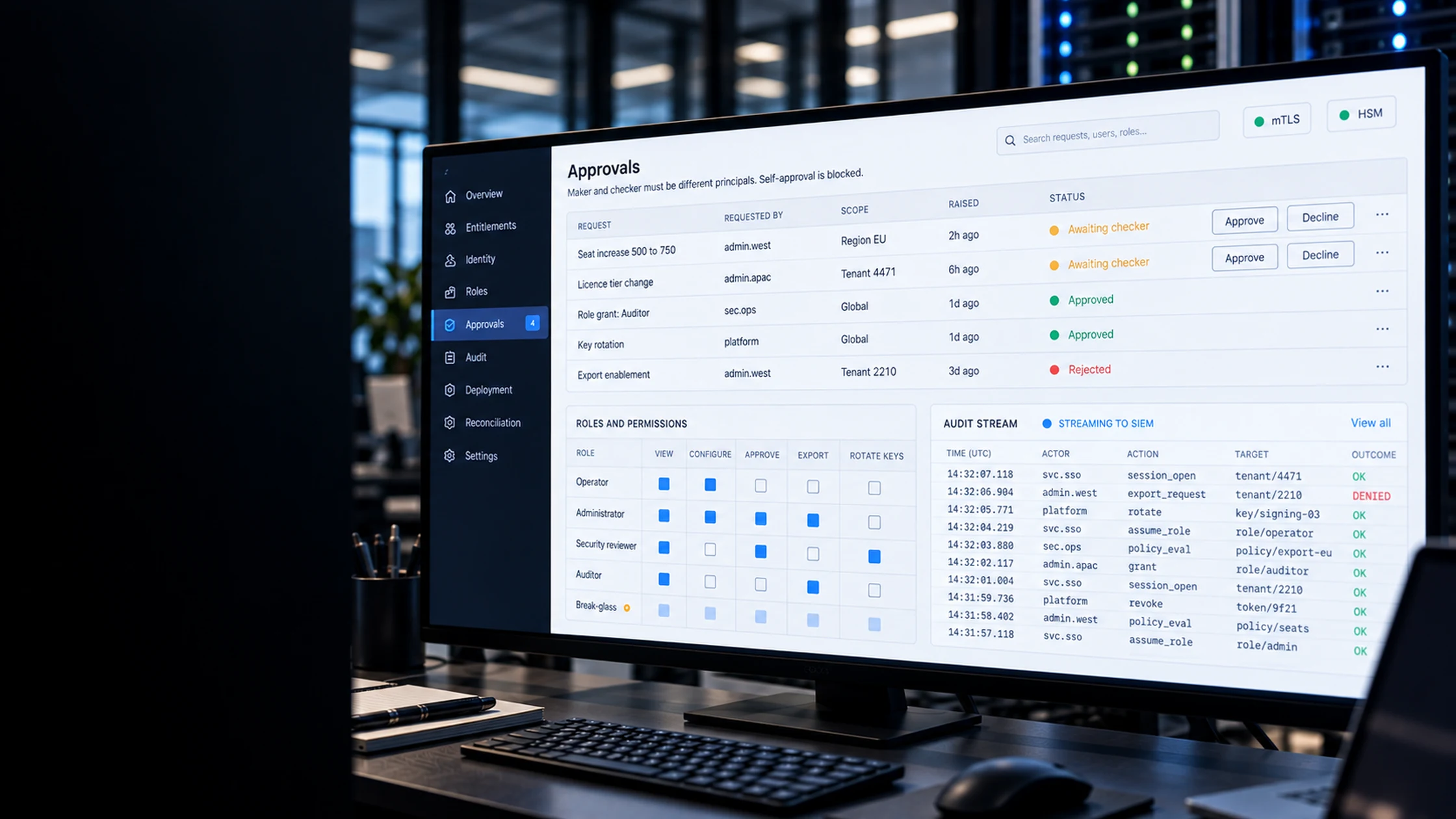
Gates in sequence.
The agent proposes a candidate answer. It passes through gates one at a time, and only a candidate that clears every gate ships.
02
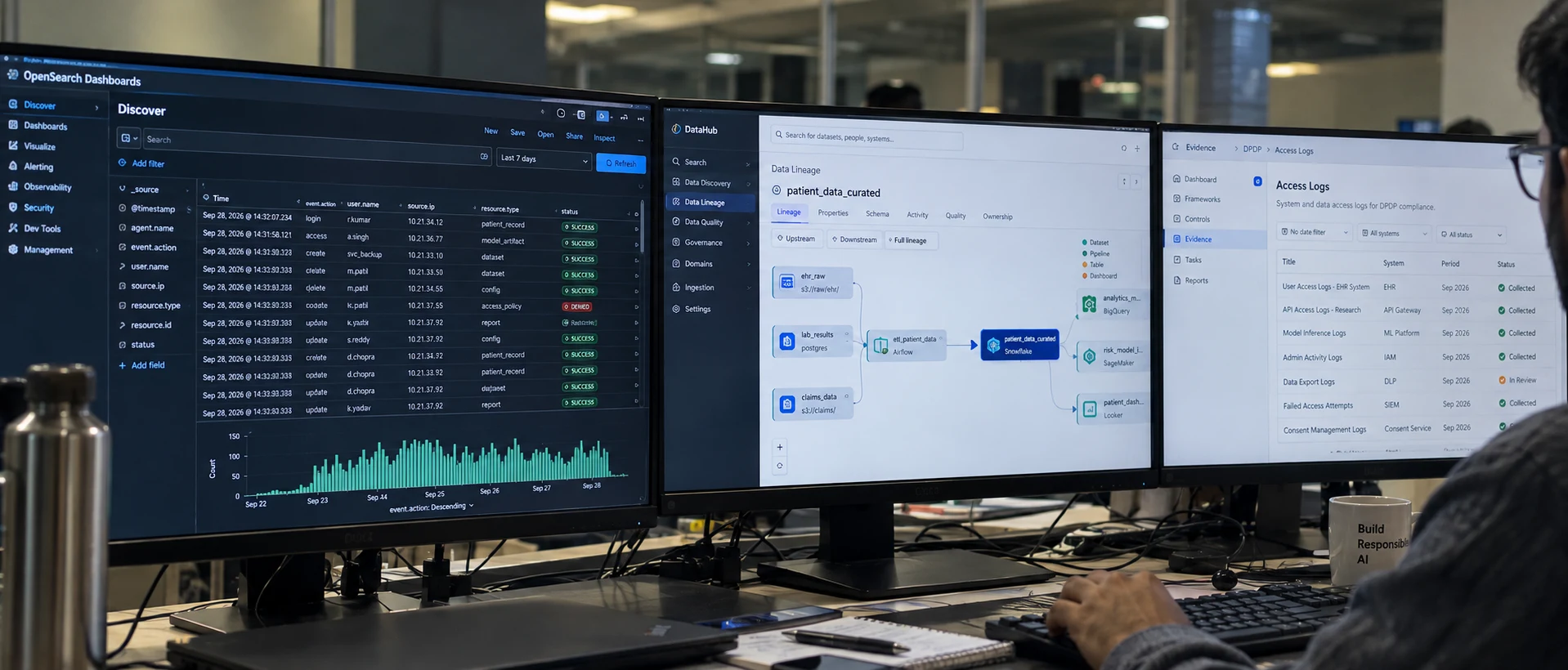
Each gate asks one question.
A gate returns a pass or a fail, with a reason and a proof. Cheap gates run first and expensive ones last, and the first failure stops the run.
03

Every run can be replayed.
Each run is logged, so it can be replayed and audited later. The same input with the same gate configuration gives the same verdict every time.
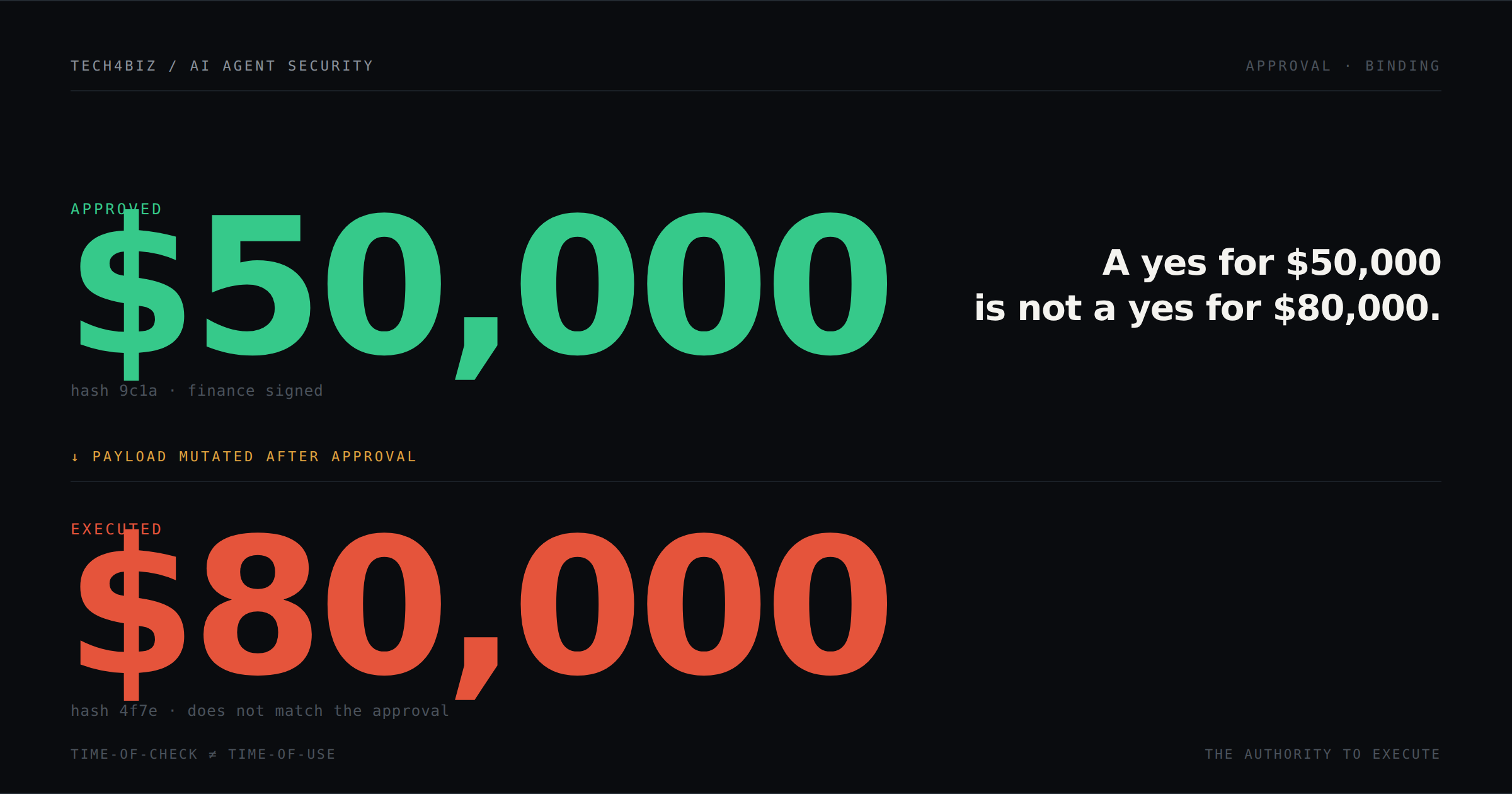
04
A verdict, with no confidence score.
A confidence score would admit that the system cannot say whether the decision is compliant, only how comfortable it feels.

How we engage
How the work is set up
- Team
- A dedicated pod, billed monthly, with a three-month minimum.
- Starting
- Within one to two weeks of agreeing what gets built, what gets left out, how payments work, and the roadmap after launch.
- Working hours
- 7am to 8pm IST, with calls until 10pm IST. That covers the US Eastern morning.
- Ownership
- All code and IP are yours on payment.
- Architecture only
- We can design the architecture for a team you already have. Your team then owns delivery. We take responsibility for execution only when our own team builds it.
Questions
Before an engagement
Does this work on an agent we built ourselves?
Is this a penetration test?
What do we get at the end?
Read the full explanation of the approach
What we do
We test the parts of an agent that sit between the model and the action. Whether a planted fact survives a reload. Whether one user can see another user’s memory. Whether a document someone uploads can change how the agent answers a later question. Whether an instruction hidden inside retrieved content gets followed.
Each of those is a measurement with a defined pass condition, not an opinion about risk posture. You get the result per scenario, the fixtures that produced it, and a re-runnable harness so you can check us.
Why memory is the weak joint
Prompt injection gets the attention, but a prompt injection ends with the conversation. Something written into memory does not. It persists, it gets retrieved into future contexts, and it arrives wearing the same clothes as anything the user said themselves.
Frameworks change between releases, and a defense that held last quarter may not hold now. That is the case for measuring on a schedule rather than once at procurement.
How an assessment runs
We seed your memory store through its own API, change records behind its back the way an attacker with database or volume access would, and read back through your own retrieval path. The verdict is what your system does, not what its documentation claims.
You get the fixtures and the harness with the report, so your team can re-run the whole thing after a fix without us.
What this rests on
Your store, your read path. Measured through the API your agents already use, not a synthetic harness.
Fixtures handed over. The harness comes with the report so your team can re-run it after a fix.
Findings before conclusions. Every verdict is what your system did, reproducible on your own machine.

Put a gate between your agents and their actions.
Start the conversation →