What we do
We take products from architecture through production: system design, build, test infrastructure, deployment and the operational handover. Because hardware, AI and infrastructure sit under one roof, the team that designs your board can talk to the team that designs your data model, which is where most cross-domain products go wrong.
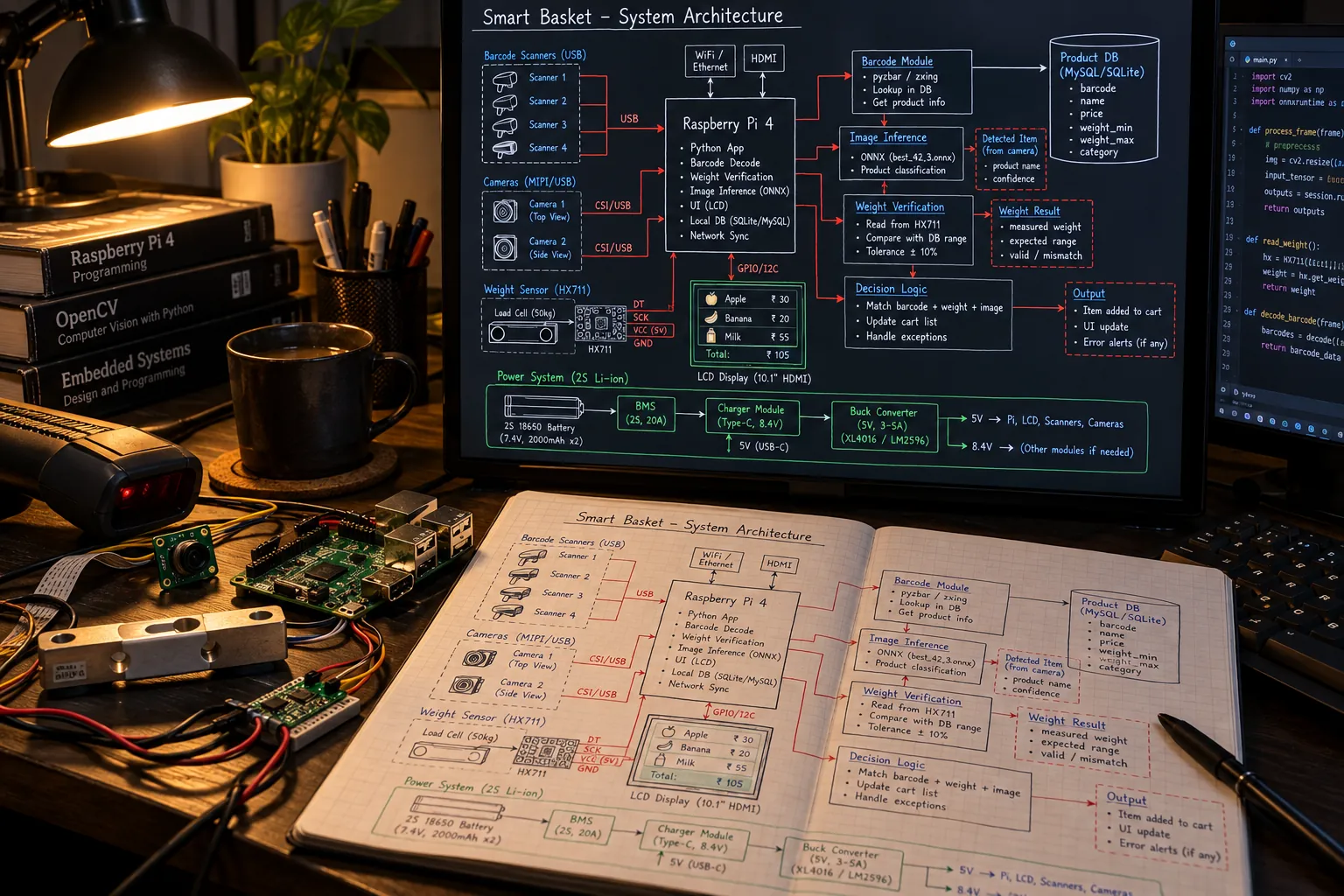
Architecture first, and why that ordering matters
The expensive mistakes in a hard product are made in the first month and discovered in the twelfth. So engagements start with architecture: the data model, the failure modes, the compliance boundary, the parts that are one-way doors. You get that thinking in writing early, which also means that if you take the build elsewhere, you are taking a real plan with you.
Products that begin with a sprint and a backlog get their architecture by accident, and accidental architecture is what our rescue practice sees the other end of.
Cross-domain products are the specialty
A device that streams telemetry into a cloud platform with an AI layer on top crosses four engineering cultures, and the failures happen at the borders: the firmware team’s assumptions about connectivity, the cloud team’s assumptions about data quality, the AI team’s assumptions about both. Having all four cultures in one firm changes what gets designed, because the border conversations happen at the whiteboard instead of in production.
Delivered examples include a HIPAA medical billing platform compliant from the first commit, connected-vehicle gateway hardware from spec to prototype, and industrial telemetry platforms on open standards.
Working with funded teams
For a founder, engineering choices are investor conversations six months later. We build with that audience in mind: decisions documented well enough to survive due diligence, spend tied to milestones a board recognizes, and no dependence on us that you cannot unwind. Your repositories, your infrastructure, your IP, from the first day. Our due diligence arm reviews other firms’ builds for investors; we engineer as if that review is coming, because sometimes it is.
How we engage
- Team
- A dedicated pod, billed monthly, with a three-month minimum.
- Starting
- Within one to two weeks of agreeing what gets built, what gets left out, how payments work, and the roadmap after launch.
- Working hours
- 7am to 8pm IST, with calls until 10pm IST. That covers the US Eastern morning.
- Ownership
- All code and IP are yours on payment.
- Architecture only
- We can design the architecture for a team you already have. Your team then owns delivery. We take responsibility for execution only when our own team builds it.
Questions we hear before engagements
Who owns the IP?
You do, entirely and from the start: code, designs, documentation, infrastructure accounts. This is contractual and non-negotiable in your favour.
What does the team look like?
Senior-weighted and sized to the problem, with the architecture owned by named engineers you can talk to. We do not staff for optics.
How do you handle time zones with US, Australian and Singapore clients?
Overlap windows are agreed upfront and protected, and the written architecture discipline means progress does not depend on meetings.
What happens after launch?
A real handover if you are taking it in-house: documentation, runbooks, pairing with your hires. Or an ongoing engineering relationship if you are not. Both are first-class outcomes; the plan just has to name one.
Related capability
If your system has to be right, let’s talk.
Start the conversation →