


Task cardRule 01 of 04
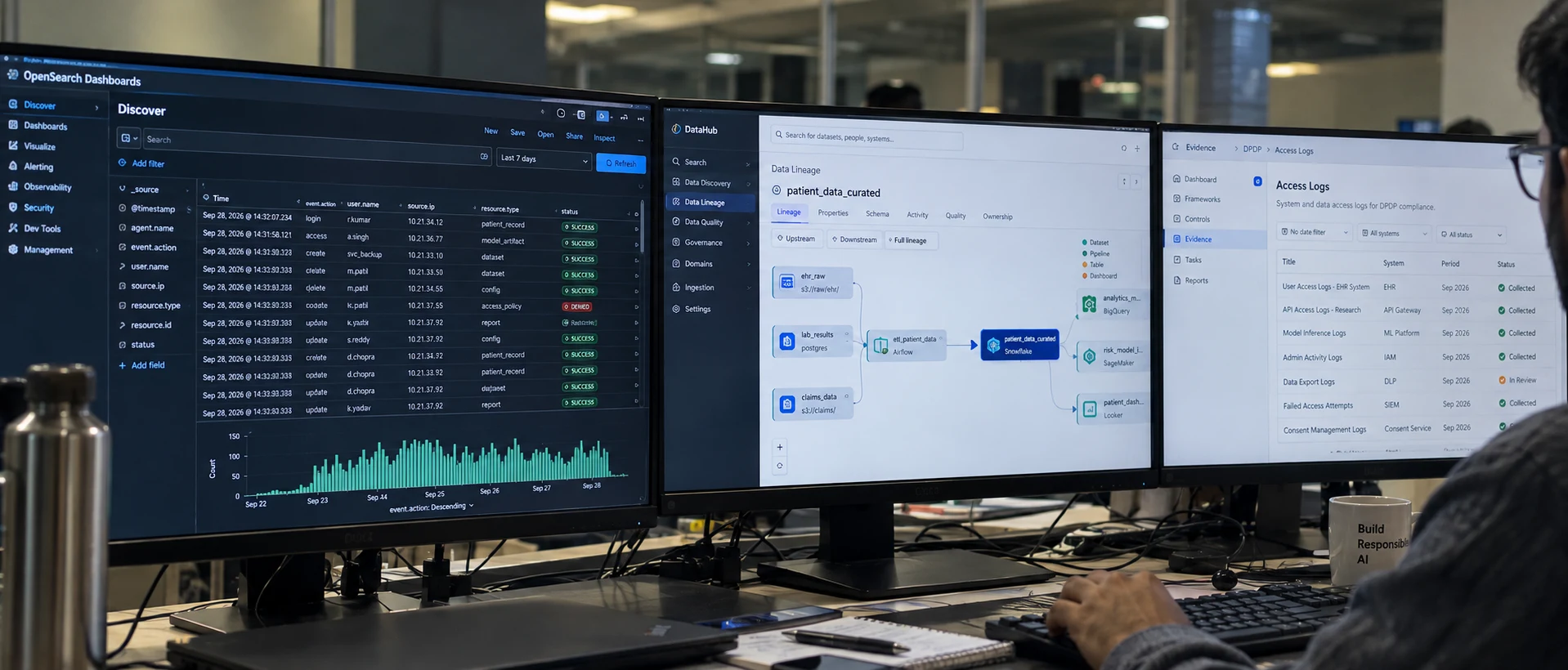
Fixed rules score the evidence first.
The deterministic gate runs before any model sees the item.
AI assurance and independent verification
Proof your AI doesTech4Biz checks AI systems against what they claim, and hands you the method so anyone can re-run the result.
How it works
Each claim gets the verdict its evidence supports. Open a claim to read what stands behind it.
Assessment card
Illustration. Not a record.
EvidenceChecked against what actually serves requests, not against the configuration that describes it.
EvidenceThe evaluation re-runs, but on a narrower set of cases than the claim implies.
EvidenceThe inputs were not kept, so the decision cannot be reconstructed.
EvidenceTested by trying to get past them. They held.
Inspecting the claims…
Everyone can show you a benchmark they ran themselves.
Far fewer can show you the number in the deck was measured.
Where we are independent, and where we are not
That separation is the whole value of the assessment, and we would rather lose the engagement than blur it.
Every assessment ships with its method and its harness, so you can re-run it yourself, hand it to a different firm, or put it in front of an auditor without us in the room.

From real work
Tech4Biz assesses AI systems from the outside and hands over the method, so your board, your auditor or your customer can reproduce the result without us.
The same discipline runs through the regulated platforms Tech4Biz has built, from life sciences and banking to insurance.
Client names stay private.
How it is built
Drawn from a bank control-assurance platform
The deterministic gate runs before any model sees the item.
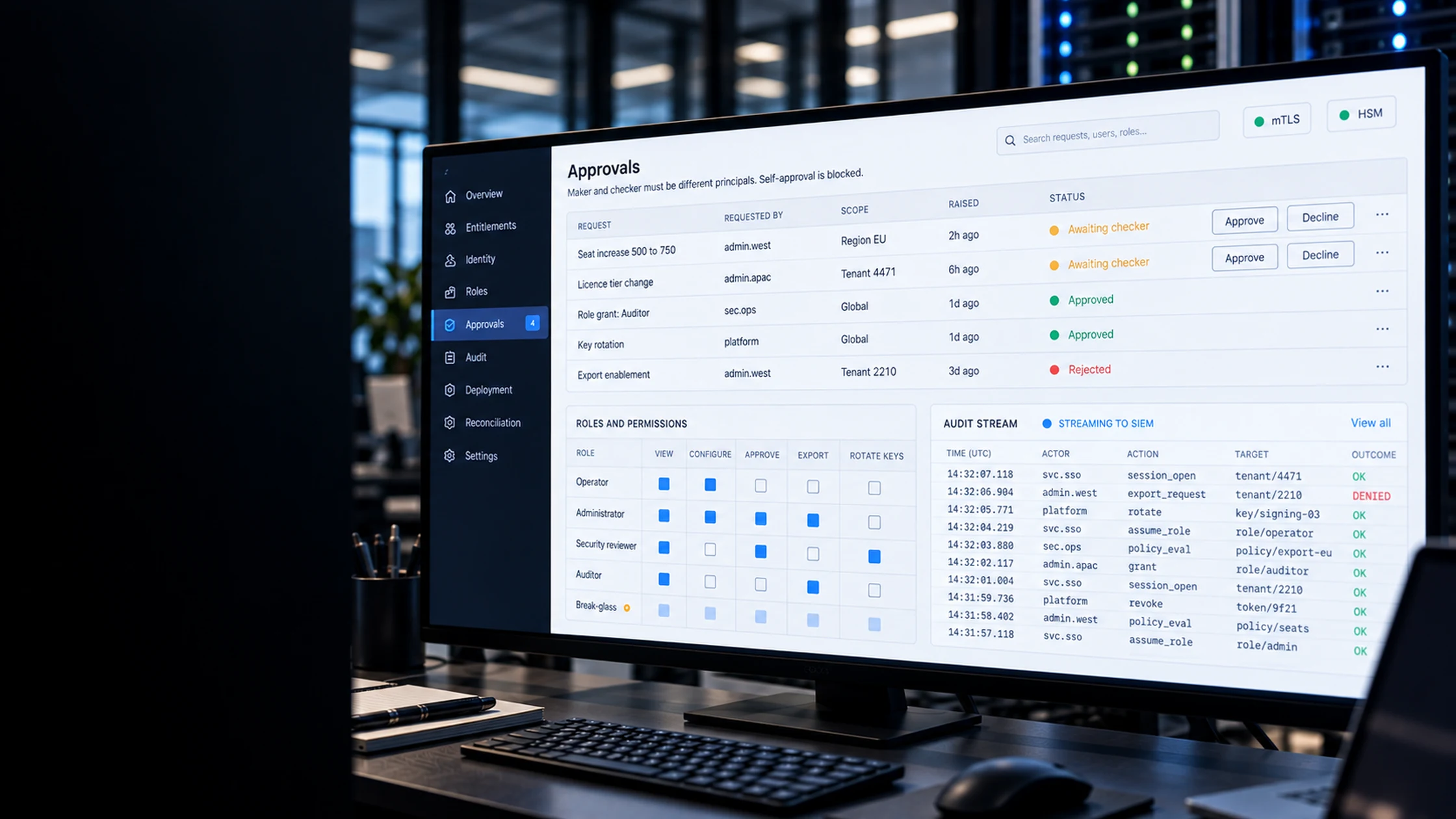
It cannot rescue an item the gate rejected, and any score it gives has to quote its evidence.
An abstention goes to a human reviewer for confirmation.
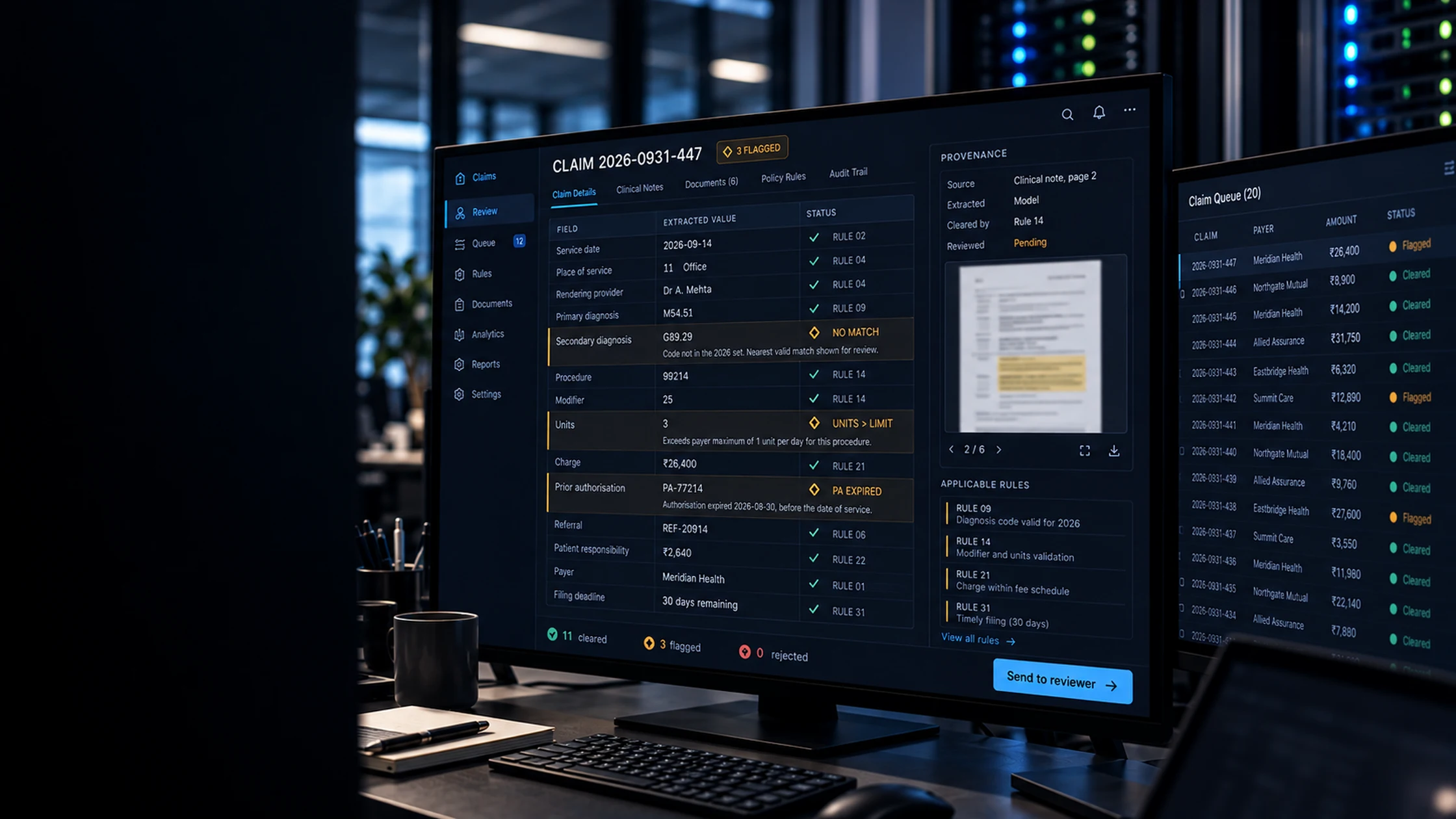
An item that scores below the reliance floor is shown to the second line anyway, flagged, so review is never a rubber stamp.
Insights
How we engage
Questions
Everyone can show you a benchmark they ran themselves. Far fewer can show you that the model answering in production is the one they said it was, or that the number in the deck was measured rather than estimated.
We check AI systems against what they claim. That means verifying the model actually serving a request rather than the one named in the contract, re-running the evaluation that produced the headline number, tracing how a decision was reached six months after it was made, and testing whether the controls around the system hold when someone tries to get past them.
The output is a written assessment with the method attached, so your board, your auditor or your customer can follow the reasoning rather than trust the conclusion.
Under India’s DPDP Act, the obligations on businesses, and the penalties for breaching them, apply from 13 May 2027, and the EU AI Act is phasing its obligations in over the same period. Both ask the same thing in different words: show that the system behaves as described, and show the evidence was produced as it ran rather than assembled afterwards.
Most organizations discover the gap at the point someone outside the company asks the question. By then the evidence either exists or it does not, and it cannot be backfilled honestly.
If we built a system, we do not also certify it. That separation is the whole value of the assessment, and we would rather lose the engagement than blur it.
Every assessment ships with its method and its harness, so you can re-run it yourself, hand it to a different firm, or put it in front of an auditor without us in the room.
Method handed over. The harness ships with the report so the result can be re-run without us.
Regulated delivery. GxP quality systems, HIPAA platforms and APRA CPS 230 assurance already shipped.
Disclosure first. Findings go to the vendor privately before anything is published.
Know what holds before anyone else asks.
Start the conversation →