
AI with deterministic gatesThe model drafts,
the rules decide.
Tech4Biz builds AI systems where a model reads and drafts, and a rule engine built from your own published policy decides what goes out.
From real work
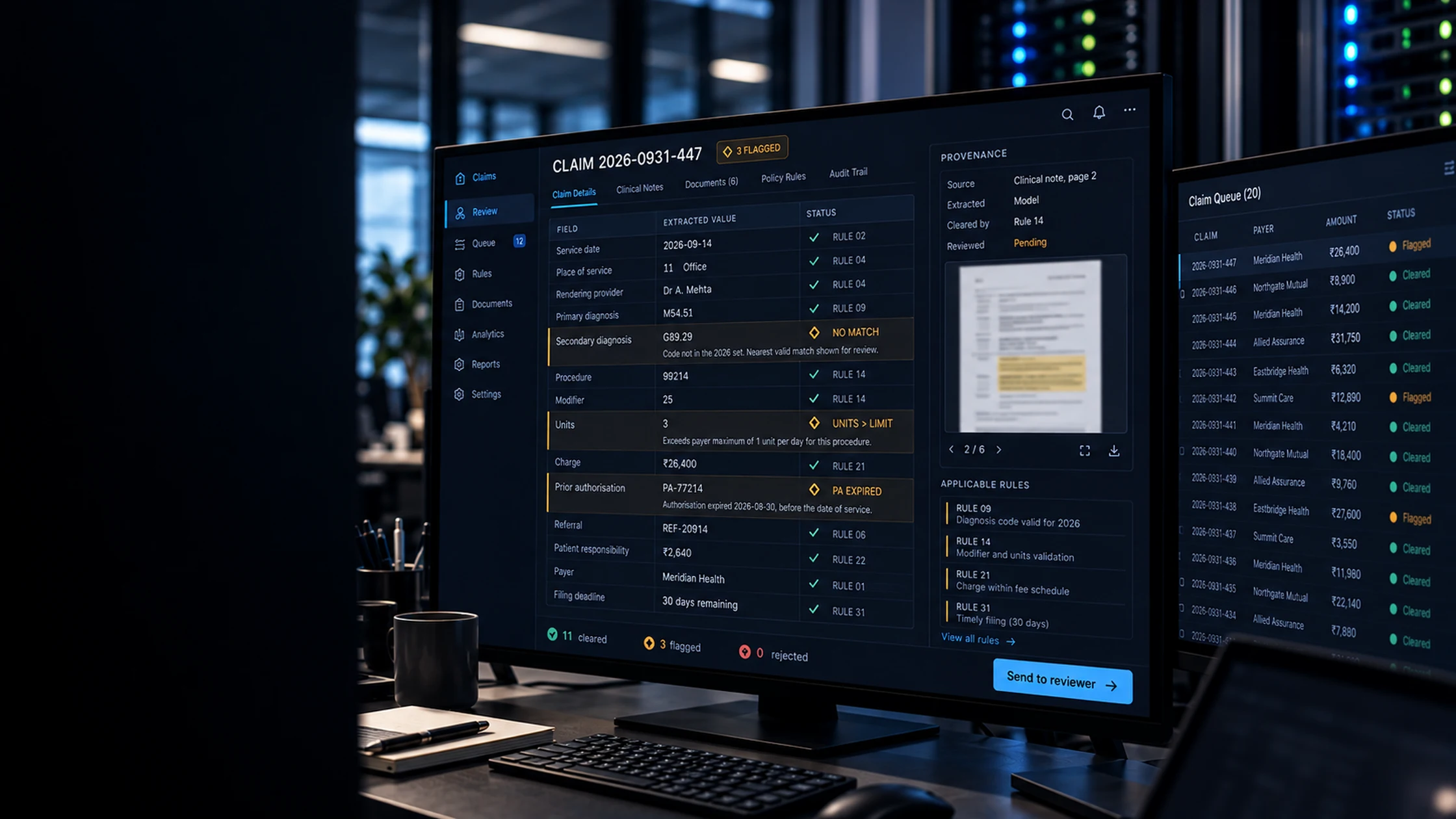
Every claim is checked against the insurer’s own rules before it leaves.
Tech4Biz architected the claims layer behind a regulated billing platform. The model drafts the codes, and a rule engine built from each insurer’s own published policy decides what goes out.
- Medical claims701canonical cases from major US insurers
- Medical claimsABOUT 1,250deterministic rules derived from them
- Medical claims4major insurers’ policy sets encoded
- GxP quality7 DAYSto the first backend
- GxP quality2 WEEKSfrom the start to the main portal
- Bank assurance5sprints to a working proof of concept
- Bank assurance12services in the platform
The same principle runs through the regulated platforms Tech4Biz has built, from healthcare and life sciences to banking and enterprise AI.
The gate pipeline behind this pattern is open source. Determ8 ships its core under the Apache 2.0 license, with four free gates. Read the write-up Read the code
Client names stay private.
How it works
Every claim runs the same line.
The model reads and drafts. A deterministic layer decides what proceeds.
ILLUSTRATION. NOT A RECORD.
Cleared. The codes match the code set, the totals are computed and every required field is present. Each field carries where it came from and which rule cleared it.
Plenty of workflows are too repetitive to keep doing by hand and too consequential to hand to a model on its own.
Put the model where judgment helps, and a rule where judgment is not allowed.

What the rules handle
The parts of the work a model should never guess.
- R-01CodesEvery code is checked against the actual code set.
- R-02TotalsTotals are computed by the rule engine.
- R-03FieldsRequired fields are enforced by the schema.
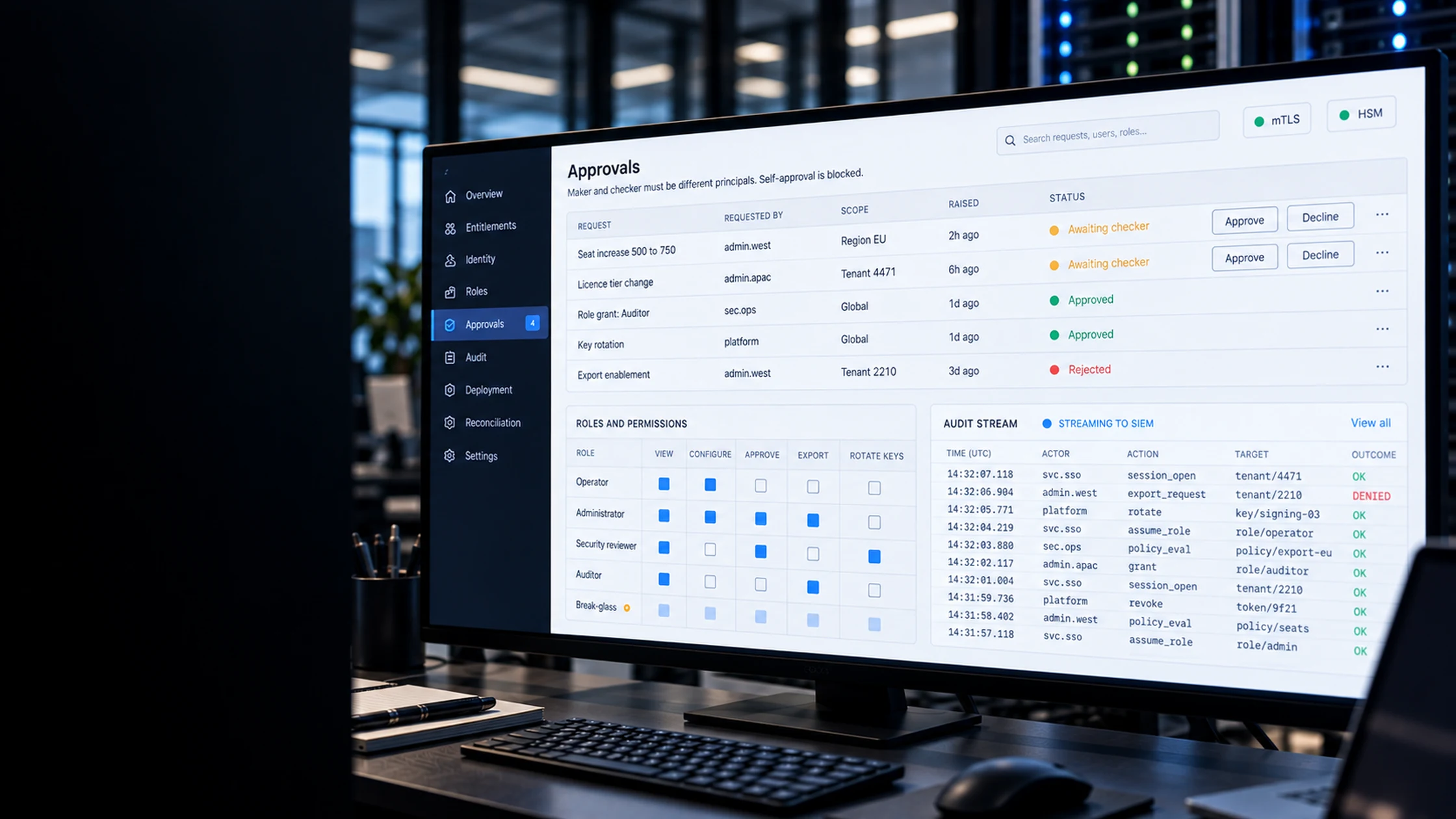
- R-04ExceptionsAnything the rules cannot clear goes to a person with the reason attached, rather than going out and failing later.
How it is built
Seven decisions that keep a model from deciding for itself.
Decision 01 of 07
The rules come from the insurer’s own document.
The extractor reads the source policy PDF. AI-written summaries of the same policies drifted: one rule read six weeks in one summary, twelve weeks in another and three months in a third.
Where this pattern earns its keep
High volume, low tolerance, an outside party ready to reject the work.
The common shape is the same every time: high volume, low tolerance, and an external party who will reject the work if it is wrong.
How we engage
How the work is set up
- Team
- A dedicated pod, billed monthly, with a three-month minimum.
- Starting
- Within one to two weeks of agreeing what gets built, what gets left out, how payments work, and the roadmap after launch.
- Working hours
- 7am to 8pm IST, with calls until 10pm IST. That covers the US Eastern morning.
- Ownership
- All code and IP are yours on payment.
- Architecture only
- We can design the architecture for a team you already have. Your team then owns delivery. We take responsibility for execution only when our own team builds it.
Questions
Before an engagement
How is this different from just using an LLM with good prompts?
What happens to the cases the rules reject?
Can you work inside our existing system?
Read the full explanation of the approach
Plenty of workflows are too repetitive to keep doing by hand and too consequential to hand to a model on its own. Claims, filings, submissions, returns. The answer is not a better prompt. It is putting the model where judgment helps and a rule where judgment is not allowed.
What we do
We build systems where a model does the reading, the extraction and the drafting, and a deterministic layer decides whether the result is allowed to proceed. Codes are checked against the actual code set rather than recalled. Totals are computed, not generated. Required fields are enforced by the schema. Anything the rules cannot clear goes to a person with the reason attached, rather than going out and failing later.
The result is a workflow that moves at machine speed on the ordinary cases and stops hard on the ones that matter, which is the opposite of what happens when a model is left to decide for itself.
Where this pattern earns its keep
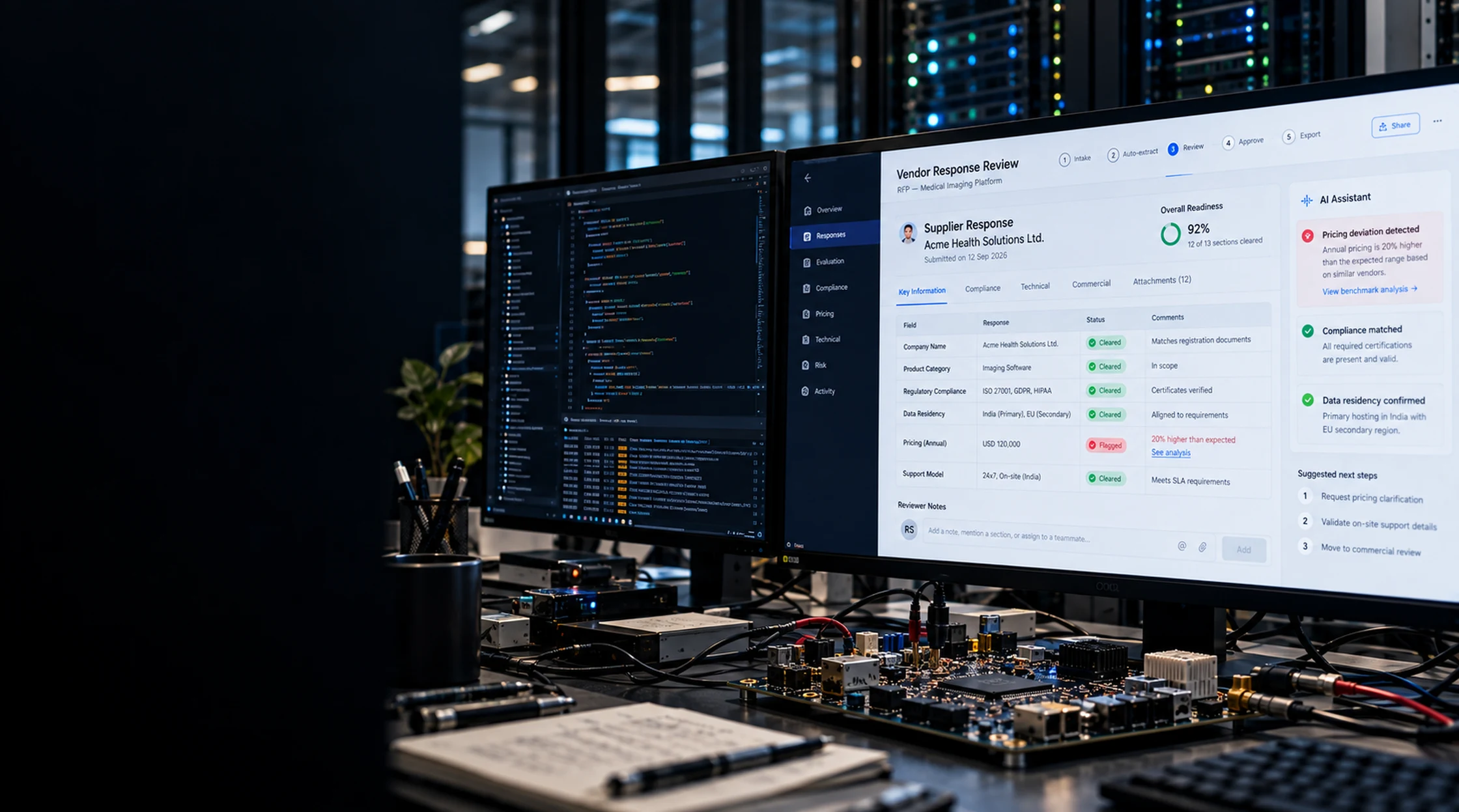
Healthcare claims and insurance filings, where a rejected submission costs weeks and a wrong one costs more than that. Tax and statutory returns, where the arithmetic has to be arithmetic. Pre-sales and bid responses, where the answer has to match what the organization has actually committed to elsewhere. Regulatory submissions, where the format is as binding as the content.
The common shape is the same every time: high volume, low tolerance, and an external party who will reject the work if it is wrong.
Why we do it this way
A model asked to fill a form will fill it. It will produce a plausible code, a plausible total and a plausible justification, and nothing in the output tells you which parts it knew and which it inferred. In a workflow that gets audited, that distinction is the whole thing.
So we draw the line explicitly and write it down. Every field in the output carries where it came from, which rule cleared it and what a reviewer would need to check. When somebody asks six months later why a submission looked like that, the answer is in the record rather than in a reconstruction.
What this rests on
Field-level provenance. Every output traceable to its source and the rule that cleared it.
Audit discipline. The same traceability standard we apply on GxP and prudential platforms.
Tier 1 enterprises. Tech4Biz works with Tier 1 enterprises. Examples on this pattern include GxP quality management and bank control assurance. Client names stay private..

If your system has to be right, let’s talk.
Start the conversation →