What we do
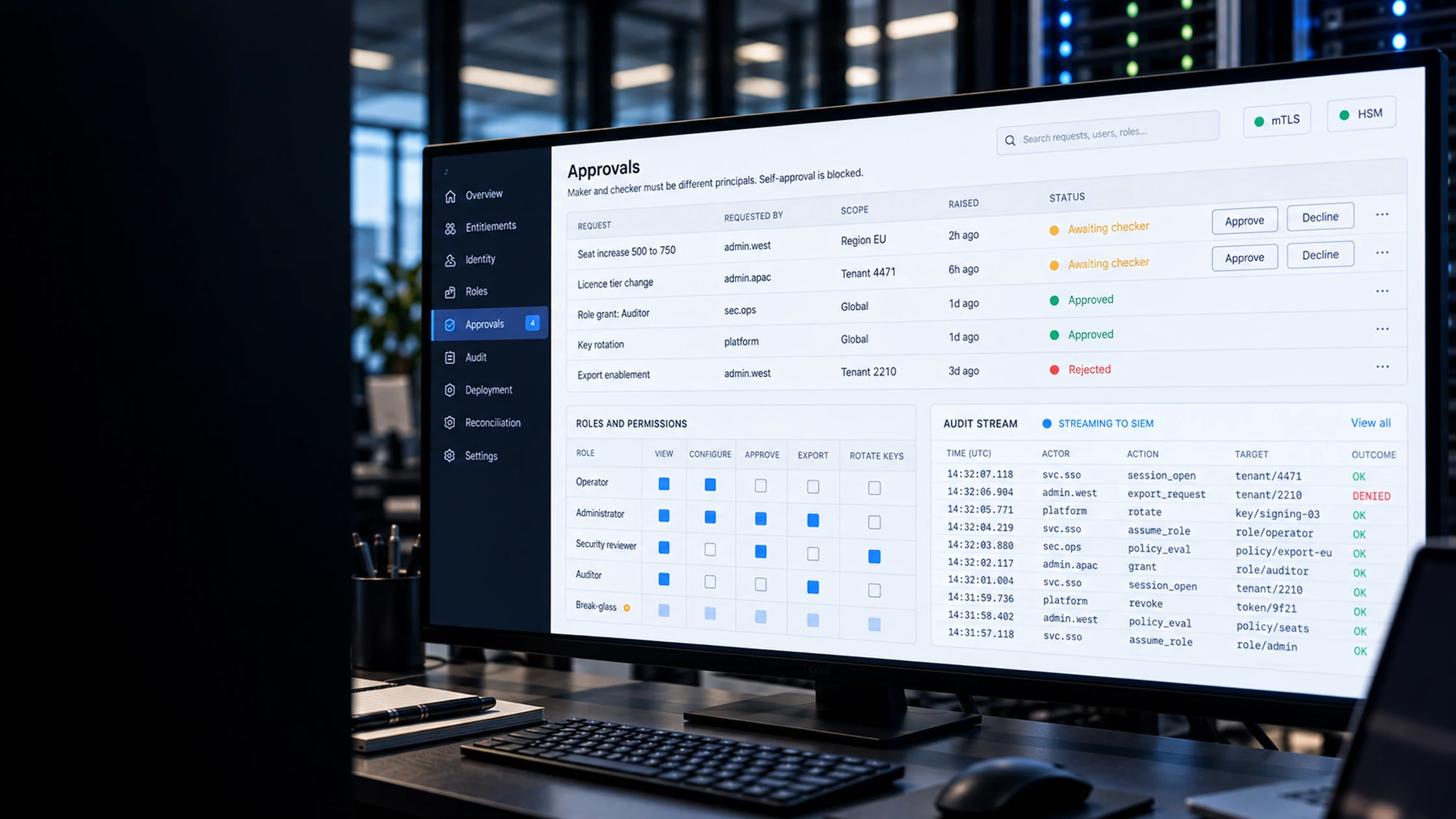
We build the layer that sits around a product so a regulated enterprise will accept it. Licensing and entitlement. Identity and single sign-on against their directory. Role-based access with maker-checker on the changes that matter. Audit logging that reaches their SIEM in a shape their analysts already understand. Silent, managed deployment. Reconciliation so their records and yours agree at the end of the month.
We also handle the awkward parts: working through inspection proxies without breaking the security model, recovery objectives the bank will hold you to, and the hundreds of RFP rows that arrive as a spreadsheet and have to be answered line by line.
Why this blocks good products
The team that built the engine is usually not the team that enjoys building an entitlement service. So it gets deferred, then it gets built in a hurry under a deal deadline, and the security review finds the seams.
The work is unglamorous and highly specific. It also rarely differentiates the product, which is exactly why handing it to a team that has done it before tends to be the cheaper path.
How the engagement runs
We start from their requirements rather than from your roadmap, because the requirement list is the thing being graded. That usually means reading the RFP in full and marking honestly which rows are met today, which are met with work, and which are not going to be met, since a clean no is survivable and an optimistic yes is not.
Then we build and hand over, with the architecture written down in the form their reviewers expect rather than in the form your engineers would have chosen.
WHAT THIS RESTS ON
Bank-grade delivered
Licensing, identity, admin and audit layer built for a security product entering a major bank
Proxy-safe by design
Mutual TLS with signed requests, working with full inspection rather than around it
RFP answered in full
Hundreds of requirement rows assessed and commented, row by row
How we engage
- Team
- A dedicated pod, billed monthly, with a three-month minimum.
- Starting
- Within one to two weeks of agreeing what gets built, what gets left out, how payments work, and the roadmap after launch.
- Working hours
- 7am to 8pm IST, with calls until 10pm IST. That covers the US Eastern morning.
- Ownership
- All code and IP are yours on payment.
- Architecture only
- We can design the architecture for a team you already have. Your team then owns delivery. We take responsibility for execution only when our own team builds it.
Questions we hear before engagements
Do you need access to our core product code?
Often not. This layer usually wraps the product rather than modifies it, which also keeps your release cycle independent of ours.
Can you help answer the security questionnaire too?
Yes, and we would rather do it with you than after you. The questionnaire tells us what has to be built, so answering it early is cheaper than answering it twice.
What if the buyer asks for something we genuinely cannot do?
We say so in the response. A specific no with a reason survives a review. A vague yes gets found, and it is found at the worst possible moment.
Related capability
If your system has to be right, let’s talk.
Start the conversation →